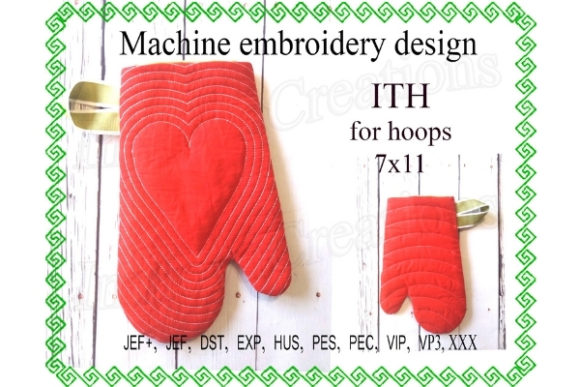
Potholder - in the Hoop: A Designer’s Review for Brand Merch
As an embroidery designer who has spent years digitizing files and consulting with small business owners, I approach every new machine embroidery design with a critical eye. It is not just about whether the stitch path looks pretty on a screen; it is about how that design translates into a tangible asset for a brand. Recently, I reviewed the Potholder - in the Hoop file, and while its primary category is clearly Kitchen, its potential extends far beyond the stove. For boutique owners, Etsy sellers, and creative studios, this item represents a unique opportunity to create high-value, functional branded merchandise.
First Impressions: Professionalism Meets Handmade Charm
The immediate appeal of the Potholder - in the Hoop lies in its construction promise. The description highlights that "inside there are no open seams and embroidery," with everything covered by lining. From a design perspective, this signals a premium finished product. In the world of commercial embroidery, clean finishes are what separate amateur hobbyist items from professional retail goods. When a customer picks up a branded item, the interior quality speaks volumes about the brand’s attention to detail.
This design feels rustic yet polished. It carries the warmth of a handmade product but maintains the structural integrity required for daily use. For a bakery, florist, or local café, this aesthetic aligns perfectly with brands that want to project authenticity and care. It is not overly modern or stark; rather, it offers a classic, welcoming vibe that encourages customer engagement.
Real-World Business Applications Beyond the Kitchen
While the title suggests a kitchen tool, savvy product designers know that utility drives sales. Here is how I envision this digital embroidery file being utilized across various small business sectors:
- Boutique Merchandise: Sell these as standalone branded gifts. A coffee shop can offer them alongside bags of beans, creating a complete sensory experience.
- Customer Appreciation Gifts: High-end real estate agents or financial advisors often look for useful, non-perishable gifts. A custom embroidered potholder is practical and stays in the client’s home, reinforcing brand recognition daily.
- Event Swag: For craft fairs or local markets, these serve as excellent low-cost, high-perceived-value items that draw people to your booth.
- Staff Uniforms and Aprons: While the potholder itself is the product, the technique used here can inspire matching apron embroidery. If you are branding a kitchen staff, using similar stitch styles on aprons creates visual consistency.
The key selling point mentioned—"Only 1 small opening must be closed by hand stitches"—is actually a marketing advantage. It allows for a final touch of human connection. For brands emphasizing artisanal quality, this small manual step can be highlighted in your product storytelling, adding value to the small business merch.
Technical Considerations for Commercial Production
Before loading this embroidery file into your machine for a large batch, there are critical technical factors to evaluate. Since this is an "In The Hoop" (ITH) project, precision is paramount.
Hoop Size and Stabilizer Selection
You must confirm the specific hoop size required for this design. ITH designs often require larger hoops to accommodate the folding and lining process. Additionally, because the item will be subjected to heat and frequent washing, your choice of stabilizer is crucial. A cut-away stabilizer might provide better long-term durability than tear-away, ensuring the embroidery does not pucker after multiple laundry cycles. Always test on the actual fabric texture you plan to use. Cotton canvas behaves differently than polyester blends, affecting how the stitches lay.
Thread Colors and Contrast
For branded applications, thread colors must align with your brand identity. However, do not sacrifice visibility for brand loyalty. If your logo is light blue and you are stitching on a navy potholder, ensure there is enough contrast. I recommend creating a printable mockup first to visualize how the design assets look together. Test the design in black and white first to check if the details hold up without color reliance. This is especially important if you plan to offer monogrammed versions for corporate clients.
Where to Use Caution
Not every application is suitable for this specific type of embroidery. While it excels as a standalone item, attempting to adapt this exact ITH structure onto curved surfaces like cap embroidery or tight spaces on a sleeve is not feasible. This design is meant to be flat and functional. Furthermore, if you are considering using similar dense stitching on delicate fabrics for other products, be wary of stitch density. High density can cause fabric distortion. Always review the stitch count and density settings in your software before running a production batch.
Also, consider the "hand stitch" requirement. If you are scaling to hundreds of units, that single closing stitch becomes a labor bottleneck. Calculate this time into your pricing model. For a small Etsy shop, it is manageable. For a large-scale commercial embroidery order, you may need to hire additional help or adjust your pricing to reflect the manual labor involved.
Enhancing Brand Identity and Trust
Consistency builds trust. When a customer receives a Potholder - in the Hoop that is neatly finished, with no raw edges inside, they subconsciously associate that quality with your entire brand. It suggests that you do not cut corners. This perception increases the perceived value of your custom apparel and other products. It transforms a simple kitchen item into a brand ambassador that lives in the customer’s home.
Use this product to tell your story. Include care instructions that mention the handmade closure. Share behind-the-scenes videos of the embroidery process on social media. Show the finished product in use. These actions deepen the emotional connection between the buyer and your brand, fostering loyalty that goes beyond a single transaction.
Final Designer Notes
Before committing to a full production run of this machine embroidery design, take these steps:
- Verify Licensing: Confirm that the digital embroidery file comes with a commercial license. Never assume; always read the terms provided by the designer.
- Run a Test Stitch: Embroider one unit completely, including the hand-sewn closure. Wash and dry it three times to test for shrinkage or thread breakage.
- Check File Formats: Ensure the file is compatible with your specific machine brand. If not provided, ask the seller for conversion options.
- Mockup for Approval: If working with a corporate client, present a digital or physical mockup to ensure the placement and size meet their expectations.
The Potholder - in the Hoop is more than just a kitchen accessory; it is a versatile tool for brand building. By focusing on quality construction and thoughtful presentation, you can turn this simple Embroidery project into a profitable line of branded merchandise that resonates with customers and elevates your business profile.