Jackrabbit in the Hoop Keyfob: A Designer’s Review
As an embroidery designer who has spent years digitizing and testing files for commercial use, I approach every new machine embroidery design with a critical eye. It is not enough for a design to simply look cute on a screen; it must perform under the needle, hold up to wear and tear, and serve a strategic purpose for the brand using it. Recently, I evaluated the Jackrabbit in the Hoop Keyfob, a versatile digital asset that promises utility beyond simple decoration. This review breaks down how this specific embroidery file functions within the context of small business merchandise, branded patches, and professional apparel.
First Impressions and Visual Personality
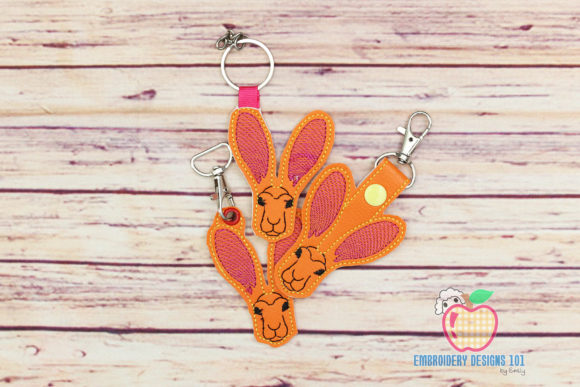
The immediate appeal of the Jackrabbit in the Hoop Keyfob lies in its adaptability. The description notes that this is an In The Hoop Machine Embroidery Key Fob Design, including all three versions: Snap Tab, Eyelet, and Ribbon. This variety is crucial for designers who need to match different hardware or aesthetic preferences. Visually, the jackrabbit motif falls squarely into the Wild Animals category, but it avoids being overly aggressive or hyper-realistic. Instead, it carries a friendly, rustic charm that feels handmade and approachable.
For boutique owners and crafters, this visual personality is a significant asset. It suggests a connection to nature, outdoorsmanship, or local wildlife, which resonates strongly with customers looking for authentic, grounded products. The design feels playful yet structured, making it suitable for both juvenile markets and adult consumers who appreciate whimsical, high-quality Embroidery work. The fact that each design is 4×4 Hoop friendly, or compatible with a 5×7 hoop, ensures that it remains compact and manageable, avoiding the bulkiness that often plagues larger animal motifs.
Real-World Business Applications
When considering small business merch, versatility is king. The Jackrabbit in the Hoop Keyfob is not limited to keychains. As a designer, I see immense potential in adapting this motif for various branded items. For a local café or bakery, this design could be scaled down and used as a chest logo accent on staff uniforms. The clean lines of a jackrabbit silhouette translate well to cap embroidery, where space is limited and clarity is essential.
Consider a florist or pet brand looking to elevate their customer experience. Including a branded key fob with every purchase adds tangible value. The Snap Tab version offers a modern, secure closure, while the Ribbon version provides a softer, more traditional feel ideal for bridal shops or baby boutiques. For creative studios, these key fobs can serve as excellent employee gifts or event merch, reinforcing brand identity in a functional way. Furthermore, the design can be isolated from the key fob structure and used as a standalone embroidered patch on tote bags or aprons, creating a cohesive look across different product lines.
In the realm of custom apparel, this design works exceptionally well on denim jackets or canvas tote bag design projects. The rustic nature of the jackrabbit complements natural fibers like cotton, linen, and denim. For Etsy sellers, offering a range of products featuring this consistent motif helps build recognition. Whether it is a key fob, a patch on a backpack, or a detail on a handmade product, the visual consistency strengthens the brand’s narrative.
Technical Considerations and Placement Strategy
While the design is promising, successful execution requires attention to technical details. The description states the design is 4×4 Hoop friendly, which is a standard size for many home and small business machines. However, when adapting this for commercial embroidery on curved surfaces like cap fronts, one must be cautious. Curved fabrics can distort designs, so testing the stitch density is vital. If the fill is too dense, the fabric may pucker; if too sparse, the backing may show through.
For apron embroidery or work shirts that undergo frequent washing, durability is paramount. I recommend using high-quality polyester threads that resist fading and breaking. When applying this design to dark uniforms, ensure there is sufficient contrast between the thread colors and the fabric. A light-colored jackrabbit on a navy or black shirt will pop, but poor color choices can render the details invisible. Additionally, always use the appropriate stabilizer. For stretchy fabrics, a cut-away stabilizer is often necessary to maintain the integrity of the design over time.
Another critical factor is the fabric texture. Highly textured materials like terry cloth or heavy wool can obscure fine details. Since this is a key fob design originally intended for felt or sturdy cotton, transferring it to delicate silks or rough canvases requires test runs. Always check if the design works at small patch sizes before committing to a large production run. Tiny lettering or intricate outlines may merge or break if the scale is reduced too far without adjusting the stitch count.
Enhancing Brand Identity and Customer Trust
Professionalism in embroidery is not just about perfect stitches; it is about thoughtful application. Using a well-digitized file like the Jackrabbit in the Hoop Keyfob signals to customers that a business cares about quality. A sloppy, poorly executed emblem can undermine trust, whereas a crisp, clean design enhances perceived value. This is particularly important for design assets used in client-facing roles, such as server uniforms or retail packaging accents.
From a marketing perspective, unique merchandise drives engagement. A distinctive jackrabbit motif becomes a recognizable symbol for the brand. When customers see this design on a key fob, a hat, or a bag, they associate it with the positive experiences they have had with the business. This emotional connection fosters loyalty. Moreover, offering high-quality branded items can justify higher price points for services or products, as customers perceive greater overall value.
Practical Designer Notes for Production
Before launching any campaign featuring this design, I advise following a strict testing protocol. First, stitch out the design in black and white. This removes the distraction of color and allows you to focus on the shape, spacing, and density. Does the jackrabbit look balanced? Are there any jumps or loose threads? Next, create a printable mockup to visualize how the design sits on different garments. Compare it beside other design assets to ensure visual harmony.
It is also essential to confirm commercial licensing before business use. While many digital files come with personal use licenses, using them for profit requires explicit permission. Check the terms provided with the digital embroidery file to avoid legal issues. Finally, always test on real fabric that matches your final product. Screen representations can be misleading, and only a physical sample will reveal how the thread colors interact with the material under actual lighting conditions.
In conclusion, the Jackrabbit in the Hoop Keyfob is a robust tool for small business owners and embroidery professionals. Its flexibility across Snap Tab, Eyelet, and Ribbon versions, combined with its charming aesthetic, makes it a valuable addition to any designer’s library. By paying attention to technical execution and strategic placement, businesses can leverage this design to create memorable, high-quality merchandise that stands out in a crowded market.