Reviewing the Aconite Flowering Plant Lineart Design
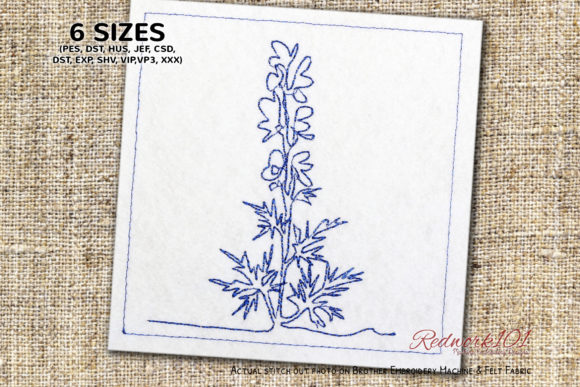
As a designer who spends half my life digitizing and the other half stitching, I have learned that line art is deceptively difficult. It looks simple on screen, but once it hits the fabric, the difference between elegant minimalism and sparse confusion is razor-thin. Recently, I pulled up the Aconite Flowering Plant Lineart to evaluate it for an upcoming batch of custom tote bags for a local botanical shop. My goal was not just to see if it stitched out, but to determine if it held enough visual weight to justify the price point of a handmade product.
The first impression of this design is one of quiet sophistication. Unlike bold, filled motifs that scream for attention, this piece relies on negative space and clean contours. The Aconite, with its distinctive hooded flowers and structured leaves, translates beautifully into a linear format. It feels organic yet controlled, which is exactly what you want when aiming for a modern, understated aesthetic. For those of us working in the Forest category of nature-inspired motifs, this design offers a refreshing break from the overly dense floral clusters we often see.
Real-World Application: The Tote Bag Test
I decided to test the Aconite Flowering Plant Lineart on a heavy-weight canvas tote bag. This is a common request for Etsy sellers and small shop owners who need versatile design assets that appeal to eco-conscious buyers. The project required a design that looked intentional without overwhelming the natural texture of the canvas.
During the stitching process, the design behaved predictably. Because it is primarily composed of running stitch elements, there was minimal puckering, provided I used a appropriate cut-away stabilizer. The result was crisp. The lines did not bleed into each other, and the overall silhouette remained recognizable from a distance. This is crucial for commercial embroidery where customers often view products quickly online or in crowded craft fairs. If the detail is lost, the perceived value drops.
However, the description notes that "The Box Stitch shown in picture is optional." This is a significant detail for any professional. In my test, I skipped the outer box to maintain the free-flowing, organic feel of the plant. Including a rigid geometric border around a natural subject can sometimes create a visual clash unless executed with precise color coordination. By omitting it, the design felt more like a hand-drawn sketch, which aligns perfectly with current trends in personalized gift markets.
Versatility Across Product Lines
Beyond tote bags, I evaluated how this machine embroidery design would perform on other popular items. Here is where the versatility of line art truly shines:
- Sweatshirt Embroidery: On fleece or French terry, the open nature of the line work prevents the stiffness that often plagues large fill designs. It sits lightly on the chest or sleeve, making it ideal for custom apparel brands.
- Baby Embroidery: For onesies or burp cloths, the lack of dense satin stitch or heavy fill stitch areas means the garment remains soft against sensitive skin. It is gentle, both visually and tactilely.
- Embroidered Patch Creation: While line art can be tricky on patches due to fraying edges, this design’s clear outlines make it a strong candidate for merrowed-edge patches if backed correctly.
- Holiday Embroidery: With slight color adjustments, such as using deep purples or icy blues, this Aconite motif could easily transition into winter-themed finished product lines.
For digital embroidery file sellers, this type of design is a staple. It appeals to hobbyists who want quick stitch-outs and professionals who need reliable craft business inventory. The simplicity allows for rapid production, which is essential when fulfilling bulk orders.
Technical Considerations and Fabric Choices
While the design is robust, it is not without its constraints. As an experienced reviewer, I must highlight where caution is needed. Line art relies entirely on contrast. If you stitch this embroidery file on a dark fabric with low-contrast thread, the details will vanish. I recommend testing your thread colors rigorously. A light cream thread on navy linen works; a grey thread on black cotton does not.
Additionally, consider the hoop size and placement. On curved surfaces like caps, the long, sweeping lines of the Aconite stems may distort if not hooped tightly with sufficient stabilizer. Always run a test stitch on scrap fabric that matches your final material’s fabric texture and stretch. Stretchy knits require more stabilization than woven cottons to prevent the lines from wavering post-wash.
The note regarding the optional box stitch also implies flexibility in color usage. "The color of outer Box is different color in most of the designs unless it is part of the design itself, you can skip the color dir." This suggests that the digitizer has separated these elements logically. For a printable mockup or digital preview, this allows you to customize the look easily. However, always verify the stitch density in your software before loading it onto the machine. Even though it is line art, overlapping runs can add unnecessary bulk.
Brand Value and Customer Perception
Why choose this specific design over dozens of others? It comes down to brand consistency and perceived professionalism. The Aconite Flowering Plant Lineart exudes a curated, artisanal vibe. It does not look like a generic clip-art conversion. For apparel decorators and boutique owners, this distinction matters. Customers are increasingly savvy; they can spot low-quality digitizing from a mile away. Clean lines signal quality.
Furthermore, this design supports a narrative. Aconite is a plant with history and mystery. Using it in your embroidery project allows you to tell a story about nature, resilience, or beauty. This emotional connection drives sales for handmade product lines. Whether it is a wedding gift favor or a self-care item, the design feels thoughtful.
Final Verdict for Designers
If you are looking to expand your catalog with reliable, aesthetically pleasing motifs, the Aconite Flowering Plant Lineart is a solid addition. It performs well on a variety of fabrics, from sturdy canvas to softer knits, provided you manage your stabilizer and thread contrast. It is particularly well-suited for small shop product lines that prioritize minimalist, modern aesthetics.
Before committing to a large production run, remember to check the specific license terms associated with your purchase. Ensure it covers commercial embroidery if you plan to sell the finished product. Also, confirm the available formats match your machine’s requirements, as this information is not explicitly detailed in the brief description provided.
In summary, this design respects the medium of Embroidery. It understands that less is often more, and it provides a flexible foundation for creative entrepreneurs. Whether you are creating a single personalized gift or stocking your online store, this Aconite lineart offers the clarity and elegance needed to stand out in a crowded market. Treat it with the technical respect it deserves, and it will serve your business well.